
Following Sharkey County Recent Arrests
The Sheriff's Office books everyone held at the county jail. The sheriff himself serves as jailor under Mississippi law. Almost any officer can make the arrest, though. City police, state troopers, deputies from a neighboring county, and federal agents all book into the same facility when the case lands there. Each stop in the chain creates its own record: the arresting agency writes the incident report, the jail logs the booking, and the court opens the case file. Three documents, three different questions answered.
A booking entry, bond figure, custody status, or photograph only shows where a case stands in the process. One snapshot is not the whole story. Charges can be amended, reduced, declined, or dismissed as the case moves.
Sharkey County publishes no online roster, same-day feed, multi-day blotter, booking-photo gallery, or booking app. The county sheriff's page has at times described a jail docket. It currently displays unrelated material instead. Enter nothing there while that problem persists. Reach the office through a separately confirmed directory listing instead.
| Window | Verified status | Best route |
|---|---|---|
| Same day | No official online feed located | Ask for current custody and today’s docket |
| Several days | No official blotter located | Request exact dates and check court records |
| Alerts | County VINE participation unconfirmed | Confirm coverage before relying on alerts |
| Older records | Retained docket and booking files | Submit a focused records request |
The Daily Arrest Report breaks down the same-day window. A fresh arrest can lag behind intake by hours. Release or transfer can happen just as fast. A missing web result never proves no arrest occurred.
How to Find Sharkey County Mugshots and Recent Arrests
- Call the Sharkey County Sheriff’s Office at 662-873-4321 and ask whether the person is or was booked locally.
- Request the jail-docket entry plus releasable booking, bond, release, and transfer records.
- Ask the arresting agency separately for its incident or arrest report.
- After initial appearance, use the booking date, charge wording, and affidavit or warrant number to locate the court case.
- If custody moved, search the confirmed receiving county, MDOC, or federal system.
Someone can be missing from a list for several reasons. Intake may be too recent, or the name may be indexed differently. The person may also have been cited and released. Restricted records and custody transfers hide people too. Ask the record custodian directly rather than guessing. The Mississippi Sheriffs' Association directory is the safer way to get current contact details.
That directory helps you reach the right office, but it is not a roster or custody list.
The Sharkey County Jail Roster and Docket
Mississippi law sets the rules here. Code §19-25-63 requires a public jail docket noting who authorized the confinement, the prisoner's identity, the receipt and arrest or commitment date, the cause, the time imprisoned, and the release. Section 47-1-21 adds further identity and custody fields. None of this requires a searchable website.
| Search field | Use |
|---|---|
| Full name and variants | Find spelling differences |
| Age or date of birth | Separate similar names |
| Arrest and booking dates | Distinguish event from posting |
| Arresting agency | Identify the report holder |
| Warrant or case number | Connect custody to court |
When you request a docket entry, ask whether it shows current custody, a release, or a transfer. Write down the source date. The office sets no fixed online schedule. Its photo policy and entry practices are not published. State retention rules give the records a long life, though. The MDAH schedule keeps jail dockets permanently. Booking records stay for ten years after release, and inmate case files last for 25 years. Long retention still does not mean online publication.
| Booked | Released or transferred |
|---|---|
| A jail accepted the person and recorded charges. | Local custody changed; the criminal case may continue. |
| May precede formal filing. | May reflect bond, dismissal, sentence, or movement to another custodian. |
Where Sharkey County Arrests Are Published
Start with official sources, because each one has a custodian and a correction path. News coverage and commercial indexes can suggest a lead worth checking. Neither amounts to a complete county arrest record, and no commercial page currently carries a live Sharkey County feed.
| Channel | Photo? | Official? | Access |
|---|---|---|---|
| Jail docket | Not confirmed online | Yes | Call and request it |
| Agency report | May be separate | Yes | Request from arresting agency |
| Court record | Document focused | Yes | Contact clerk |
| DPS annual data | No gallery | Yes | Historical counts only |
| Regional news | Sometimes | No | Event reporting, incomplete |
| Commercial indexes | Varies | No | Potentially stale lead only |
The Mississippi DPS Public Arrest Data portal shows the gap between periodic data and live bookings.
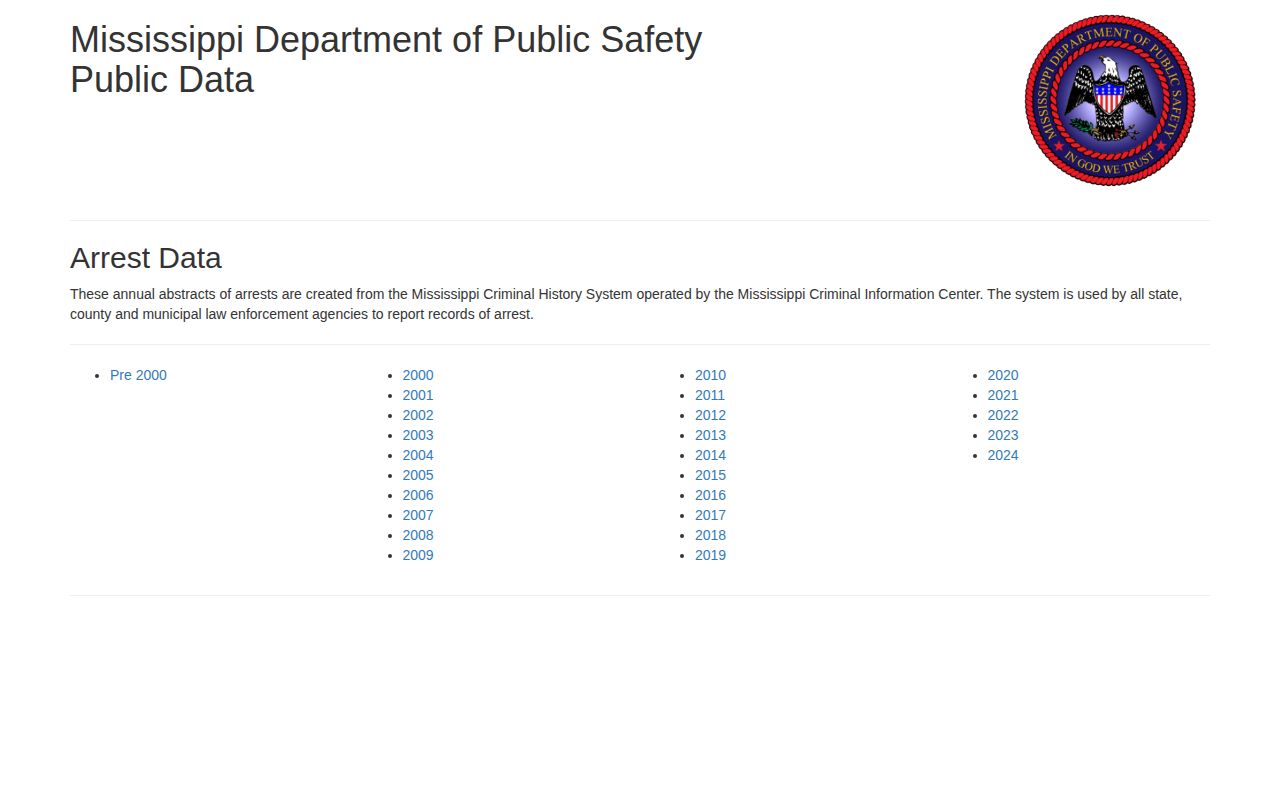
The portal holds annual and periodic arrest abstracts through 2024. It is not a same-day roster or a booking-photo source.
Recent Arrests by City
Residence, arrest location, arresting department, and jail destination are four separate facts that often get confused. The city map below is built on 2020 Census populations, not arrest volume.
- Rolling Fork Recent Arrests: an official police information page exists, but no public blotter was found.
- Anguilla Recent Arrests: no municipal feed was verified; identify the agency and confirm booking with the Sheriff.
- Cary Recent Arrests: no town feed was verified; use jail, agency, and court records.
What a Sharkey County Arrest Record Shows
A booking record documents intake and custody, nothing more. Keep the booked wording separate from a prosecutor's charging decision and from whatever the court later orders.
| Field | Meaning |
|---|---|
| Name and limited identifiers | Identity, with sensitive details potentially redacted |
| Arrest and commitment date | Event and intake timing |
| Agency and location | Who made the arrest and where |
| Warrant or citation | Asserted custody authority |
| Booked charge | Accusation subject to change |
| Bond | Release terms, not outcome |
| Release or transfer | Why local custody ended |
| Case number | Bridge to court history |
| Photo | Intake image if maintained and released |
Juvenile details, victims, witnesses, sensitive identifiers, and open investigative material are not automatically public. Request redacted copies when the full file is exempt.
Sharkey County Arrest Photos and Mugshots
Sharkey County publishes no promise that a booking photograph will appear online or stay posted for any fixed time. A photo can sit in a file yet be withheld or redacted. Ask the holder three things: whether an image exists, who keeps it, and whether a releasable copy is available. Have the person's name and booking date ready. You will find no mugshot gallery here, and no individual booking photo gets republished.
Commercial arrest sites skip transfer, correction, and disposition details, so treat them as tips rather than authority. Never pay an unverified removal demand. Start from the official disposition or court order. Then use a publisher's free correction or opt-out process if one exists. A Mississippi attorney can advise on sealing or expunction.
A booking photo captures one moment at intake. What happens to the case afterward lives in the court file, not the image.
How to Obtain a Sharkey County Arrest Record
- Confirm the custodian by phone. The Sheriff’s Office is at 120 Locust Street, Rolling Fork, MS 39159, phone 662-873-4321, fax 662-873-6135.
- Give exact dates, identifiers, agency, and known case number.
- Request electronic copies if available and a cost estimate before work begins.
- Ask the office to distinguish arrest, commitment, release, and transfer dates.
- Request redacted copies of partly exempt records and ask which retention series applies to missing items.
Mississippi public-records guidance sets response clocks. Where no procedure applies, agencies generally respond within one working day. Otherwise they respond no later than seven. A written explanation is due when more time is needed. The records then follow within fourteen working days unless you agree to more time. Reasonable actual costs and advance payment may apply. These rules do not make every record public, free, or instant.
Which Sharkey County Arrest Documents to Request
An "arrest record" request often fails because it is too broad. The useful facts about a Sharkey County arrest live in several distinct documents. The jail docket records the custody event and the authority for holding someone. A booking or intake sheet adds the commitment time, the agency, the charge wording, and the release status. The arrest or incident report stays with the agency that investigated. A warrant, affidavit, mittimus, or citation explains the asserted legal authority. Bond and release papers show what changed after intake, and a transfer record names the next custodian.
Ask by name, and invite the office to point to a differently titled equivalent. Give the full legal name. Add a narrow date range, the arresting agency if known, and the warrant or case number. Precision helps staff separate a recent booking from an older entry that was only newly indexed. It also guards against a common error. Treating arrest date, booking date, and web-posting date as one and the same is risky.
Custody confirmed but no report available? Ask which agency delivered the person to the jail. Police confirm an arrest while the county docket shows nothing? Ask whether the person was cited and released. She may have been booked in another county, transferred, or recorded under a different spelling. If the court has no case, ask whether an initial appearance has occurred. Also ask whether an affidavit or charging decision has been filed. Each of these is a verification question, nothing more.
What if only part of the file is public? Ask the custodian to cite the exemption that applies. Request release of any portions that can be reasonably separated. A restriction on one investigative detail or personal identifier does not settle the rest. The statutory docket, bond entry, release record, or any other document you asked for stands on its own status.
Sharkey County Arrest Records and Mississippi Law
Mississippi public-record law starts from access and then allows exemptions. The statutory jail docket stands on firm ground. Even so, some items stay closed. An active investigation, certain photos, juvenile records, and sealed items are not public simply because the docket is. The permanent docket points you where to look. So do the ten-year booking-record period and the 25-year inmate-file period, once a web result disappears.
Sealing and expunction are court processes, not automatic cleanups. Get the signed order. Then ask each custodian whether it has processed that order. A correction at one office does not mean every holder received the same update. The jail, the court, a state database, a news archive, or a secondary publisher may lag behind. Keep the order and any written responses. Later requests can then name the exact record and the legal change behind it.
Age changes the search path too. Start a recent Sharkey County arrest with the Sheriff, the arresting agency, and the clerk. An older docket may stay with the county permanently or move into archival handling. Booking and inmate files follow their own retention schedules. When staff cannot locate an item, ask for the formal series name. That one question separates a destroyed supporting file, a transferred archive, and a record that was never created.
Sharkey County Arrest Warrants and Most Wanted
Sharkey County publishes no online warrant database and no current most-wanted roster. Any given warrant may be sealed, recalled, or inactive. It may also be held elsewhere or indexed under a different name. Contact the issuing court or the law-enforcement custodian for its public verification process. The local Crime Stoppers line is 662-873-2652, and the statewide program lists 1-888-8CRIMES. Tip lines are not warrant searches. Never approach a wanted person or attempt a detention yourself.
Warrant, Wanted Notice, Arrest, and Conviction
These four terms mark different stages of one process. A warrant is a court order tied to taking a person into custody. A wanted notice is a public announcement. It can outlast the facts behind it unless the publisher updates it. An arrest is the act itself. Booking is the jail's intake step. A conviction comes only after a court resolves the case. Finding one stage never proves the others.
For current warrant status, identify the issuing jurisdiction and court before you call. Ask what public information can be confirmed, whether the warrant was recalled or served, and where the court file sits. Skip the historical article, the old screenshot, and the commercial name match. For personal legal guidance, talk to a qualified lawyer rather than trying to resolve the matter through a public-facing website.
After a Sharkey County Arrest: Court and Bond
Justice Court takes listed traffic matters, DUIs, ordinances, and the early stages of felonies. It sits at 120 Locust Street, PO Box 235, Rolling Fork, with phone 662-873-6140. Circuit and Chancery Court share the same street address at PO Box 218. That court is reachable at 662-873-2755. Call before sending anything sensitive. The county describes jail court three times weekly. An initial appearance happens within three days. That is no promise of a complete online case by then. It starts with arrest and booking. The sequence then runs through initial appearance, charging decision, plea or trial, disposition, release, and possible expunction. A WAPT report on a Cary case shows why disposition matters.
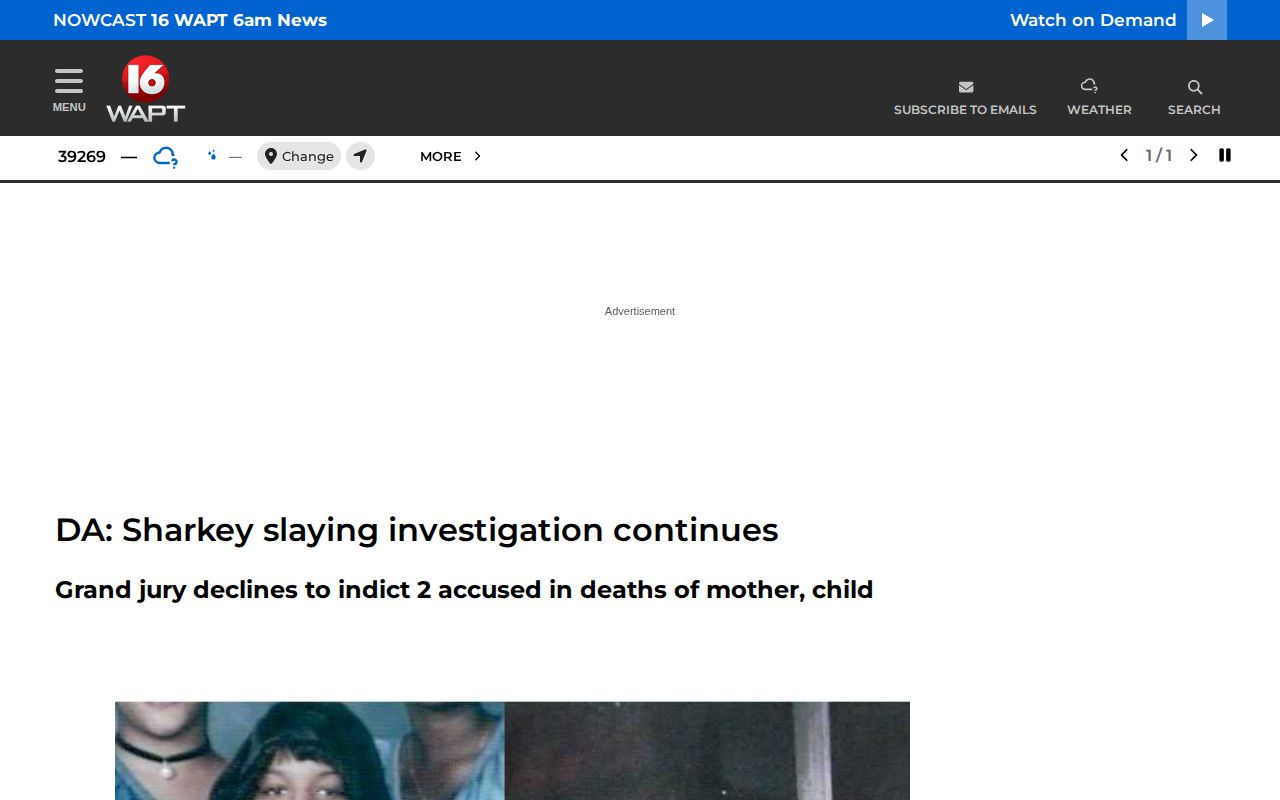
That report described arrests followed by declined indictments and release, which is why a booking always needs later verification in court.
Connecting a Sharkey County Arrest to Its Outcome
Matching a Sharkey County arrest to its court outcome takes a few exact details. Pull the full name first. Add the booking date, the charge as originally written, and the arresting agency. A warrant or affidavit number helps too, along with the initial-appearance date. Those identifiers bridge the jail record to the court docket without guesswork.
Keep the timeline intact rather than letting one event blur the next. An arrest comes first, then commitment, then the initial appearance and bond. After that come the affidavit or indictment, then a plea or trial. The disposition and sentence follow. Release, transfer, probation, or expunction may follow.
A booking record tells you what the jail took in. It does not tell you what prosecutors pursued later. For the legal outcome, go to the court docket and the final order itself. When a disposition changes the meaning of an earlier report, keep both dates visible. Set them side by side.
Mississippi Electronic Courts can point the way when a case falls under its coverage. Registration rules, fees, and sealed-case limits vary. For results that matter, confirm with the clerk. Rely on the office address and number. Do not trust an officeholder name that may shift between directory editions.
Custody Alerts After a Sharkey County Arrest
Mississippi SAVIN sends custody alerts. It serves state offenders and participating county facilities. Whether the Sharkey County jail takes part is unclear. Registration runs through VINELink or SAVIN at 601-359-5759, with a 24-hour representative at 1-888-9-MSSAVIN and TTY 866-847-1298. Alerts cover transfer, return, escape, and release, and the VINELink Inmate Check explains this focused path.
Why a Sharkey County Custody Alert May Be Missing
SAVIN alerts depend on participation and data delivery. A name may be missing for several reasons. Sharkey County participation could be absent or temporarily offline. A fresh booking may lag, or custody may sit under a different identity. A transfer may have shifted the responsible facility, or the person may sit in a custody system outside VINE's scope. Ask SAVIN directly whether the county jail participates and which identifier it needs.
Custody changes can stack up. One person may trigger several notifications. Transfer, return, escape, and release are separate updates. Treat an automated alert as a prompt to call the facility, not a photo source, a court outcome, or a full chronology. MDOC notices matter once a person enters state custody, while court notices follow a filed case rather than every jail admission.
State Prison and Federal Custody
MDOC search covers state prison, not Sharkey County bookings. Search by name or MDOC number after a confirmed sentence or transfer. Federal and ICE locators track different systems entirely. The BOP inmate locator is the official federal interface, and it does not replace the county docket.
Use it only when federal custody is indicated, since it cannot show who was newly arrested in Sharkey County.